Accurate informationMisinformation

Portrait of Yue Li

Dr. Yue Li

Assistant Professor, Department of Communication Studies, University of Kansas

My research examines how communication environments shape public understanding of public health policies, including their implications for policy attitudes and behaviors. I develop and test strategic communication involving emerging technologies, particularly generative AI, to address false and misleading information about these policies.

Research

My research combines theory-driven computational methods with longitudinal and experimental designs to examine how information circulates through digital media and interpersonal networks, and how these environments shape public understanding of public health policies and related attitudes and behaviors. I also develop and evaluate human-centered approaches to strategic communication involving emerging technologies, particularly generative AI, to address false and misleading information.

Methods
  • Natural language processing
  • Machine learning
  • Large language models (LLMs)
  • Multimodal classification with LLMs
  • LLM-driven message generation
  • Social network analysis
  • Inferential network models
  • Longitudinal panel analysis
  • Time-series analysis
  • Experiments
Software
  • R
  • Python
  • Stata
  • SAS
  • Mplus
  • SPSS

01

Message design and mechanisms of public health policy communication

How communication about public health policies relates to beliefs, attitudes, and behaviors, and the psychological processes that may explain these relationships.

Published

  1. 2023Li, Y., Wang, Z., & Li, Q. Presidential communication during the pandemic: A longitudinal examination of its relationship with partisan perceptions and behaviors in the United States. Human Communication Research, 49(4), 433–447. doi.org/10.1093/hcr/hqad025
    Abstract

    Partisanship played a key role in shaping individuals' responses to the COVID-19 pandemic in the United States. The current project applies the extended parallel processing model (EPPM) to examine how the content features of White House press conferences were associated with the partisan gap in perceptions and behavior during the early stage of the pandemic. Using supervised machine learning, Study 1 analyzes the White House press conferences regarding the pandemic during 2020. The results demonstrate that the White House focused on efficacy but included minimal threat information. Study 2 uses the threat and efficacy information in White House press conferences to predict perceived threat and efficacy as well as self-quarantine behavior measured by longitudinal surveys using nationally representative samples of U.S. adults. Time-series analysis shows that an increase of threat information from the White House was associated with a subsequent decrease in the partisan gap between Democrats and Republicans on perceived threat and self-quarantine behavior by increasing perceived threat and self-quarantine behavior among Republicans. This study contributes to presidential communication research by systematically examining specific message features and linking them to public perceptions and behaviors in the context of a public health crisis. The study also extends the EPPM to a dynamic model, estimating the asymmetric effects and self-continuity of positive (i.e., efficacy) and negative (i.e., threat) information on perceptions and behaviors.

  2. 2023Cappella, J. N., & Li, Y. Principles of effective message design: A review and model of content and format features. Asian Communication Research, 20(3), 147–174. doi.org/10.20879/acr.2023.20.023 A theoretical foundation for understanding how content and format features influence message effectiveness.
  3. 2026Parmet, T.*, Li, Y., Cappella, J., Scherer, L. D., Waters, E. A., & Housten, A. J. Media reporting of the 2024 US Preventive Services Task Force mammography guideline update. JAMA Network Open, 9(3), e260040. doi.org/10.1001/jamanetworkopen.2026.0040

ICA 2027 submissions—decisions pending

  1. 2027Li, Y., Li, Q., Jin, K., Huang, S., & Butler, A. Belief sensitivity and policy support in false and misleading information environments. Work-in-progress paper submitted to ICA 2027; decision pending. Combines LLM-assisted social media content analysis with a three-wave panel survey to examine belief sensitivity as a potential link between false and misleading information available from respondents' reported accounts and policy favorability concerning abortion, healthcare coverage, and climate change.
02

Human-centered approaches to AI-mediated communication and misinformation intervention

Developing and evaluating theory-driven, AI-generated strategic communication to address false and misleading information, alongside collaborative research on trust in AI.

Published

  1. 2026Li, Y. From problem to practice: A conceptual framework and action agenda for health misinformation resilience. Journal of Applied Communication Research, 54(1), 110–116. doi.org/10.1080/00909882.2025.2573952
  2. 2026Xu, S., Gong, Z., Li, Y., Zhao, Y., & Ahsan, A. Building appropriate trust in artificial intelligence: Examining a dynamic trust calibration model and an intervention. International Journal of Human–Computer Interaction, 1–21. doi.org/10.1080/10447318.2026.2719173
  3. 2026Xu, S., Gong, Z., Li, Y., Zhao, Y.*, & Huang, S.* The trust cost of AI errors: Examining cognitive and affective trust dynamics in human-AI collaboration. International Journal of Human–Computer Interaction, 42(10), 7666–7681. doi.org/10.1080/10447318.2025.2560522

ICA 2027 submissions—decisions pending

  1. 2027Li, Y., Gidley, E., Butler, A., Davis, N., Pino-Martinez, R., & Xu, Y. Can AI teach persuasion knowledge or create an illusion of understanding? Comparing human and AI prebunking across rhetorical tasks. Extended abstract submitted to ICA 2027; decision pending. Compares human- and AI-generated prebunking across rhetorical tasks in terms of perceived mind-modeling, persuasion-knowledge acquisition, and metacognitive confidence. Perceived mind-modeling concerns whether an explanation appears to understand why readers find a message persuasive or misleading; it does not establish the AI's actual understanding.
  2. 2027Li, Y., Gidley, E., Butler, A., Davis, N., Pino-Martinez, R., & Xu, Y. Knowing the facts or seeing through the rhetorical techniques? Two routes to resisting misleading social media posts in public health. Extended abstract submitted to ICA 2027; decision pending. A planned experiment compares human-authored and AI-generated fact-focused and technique-focused prebunking. It tests whether claim-specific factual knowledge supports resistance to related claims presented differently, and whether technique-specific persuasion knowledge supports resistance across topics.
  3. 2027Gidley, E., Li, Y., & Davis, N. Beyond truth and intent: A rhetorical-mechanism typology of false and misleading communication. Paper submitted to ICA 2027; decision pending. A theoretical foundation for identifying the rhetorical techniques used in misleading information and explaining the mechanisms through which they mislead.

03

Information diffusion and digital media ecosystems

How message characteristics, network structures, and audience engagement relate to the circulation, transformation, and organization of information.

Published

  1. 2023Li, Y., & Bond, R. M. Examining semantic (dis)similarity in news through news organizations' ideological similarity, similarity in truthfulness, and public engagement on social media: A network approach. Human Communication Research, 49(1), 47–60. doi.org/10.1093/hcr/hqac020
    Abstract

    The rise of homogenization and polarization in the news may inhibit individuals' understanding of an issue and the functioning of a democratic society. This study applies a network approach to understanding patterns of semantic similarity and divergence across news coverage. Specifically, we focus on how (a) inter-organizational networks based on media ideology, (b) inter-organizational networks based on news truthfulness, and (c) public engagement that news articles received on social media may affect semantic similarity in the news. We use large-scale user logs data on social media platforms (i.e., Facebook and Twitter) and news text data from more than 100 news organizations over 10 months to examine the three potential processes. Our results show that the similarity between news organizations in terms of media ideology and news truthfulness is positively associated with semantic similarity, whereas the public engagement that news articles received on social media is negatively associated with semantic similarity. Our study contributes to theory development in mass communication by shifting to a network paradigm that connects news organizations, news content, and news audiences. We demonstrate how scholars across communication disciplines may collaborate to integrate distinct theories, connect multiple levels, and link otherwise separate dimensions. Methodologically, we demonstrate how synchronizing network science with natural language processing and combining social media log data with text data can help to answer research questions that communication scholars are interested in. The findings' implications for news polarization are discussed.

  2. 2023Li, Y., Gee, W., Jin, K., & Bond, R. M. Examining homophily, language coordination, and analytical thinking in web-based conversations about vaccines on Reddit: Study using deep neural network language models and computer-assisted conversational analyses. Journal of Medical Internet Research, 25, e41882. doi.org/10.2196/41882

Manuscripts under review

  • Li, Y., & Jin, K. The staying power of misinformation: The differential fidelity of information with different veracity in the diffusion landscape. From my dissertation on the virality and fidelity of vaccine information with different levels of veracity.
  • Li, Y., & Jin, K. Unveiling virality: In the context of COVID-19 vaccines, accurate information triumphs over misinformation, driven by network clustering and threat information. From my dissertation on the virality and fidelity of vaccine information with different levels of veracity.
  • Xue, H., Li, Y., Lyons, B. A., & King, A. J. The Disconnect Between Online #MAHA Discourse and the Make America Healthy Again Campaign's Stated Priorities Across Seven Online Sources. Minor revision

04

Interpersonal communication networks and social influence

How interpersonal networks are organized, how they change over time, and how they relate to attitudes and communication patterns.

Published

  1. 2022Li, Y., & Bond, R. M. Evidence of the persistence and consistency of social signatures. Applied Network Science, 7(1), 1–19. doi.org/10.1007/s41109-022-00448-0
    Abstract

    Human social networks are composed of multiple dynamic and overlapping communication networks, in which membership changes over time. However, less well understood are whether and how our communication patterns are similar or different over time and across various modes of communication. Here, we use data on the frequency of phone calls, text messages, and in-person interactions to examine the social signatures of more than 700 students in a university setting. Our analysis shows that although there is substantial turnover in participants' networks, participants' social signatures are persistent across time and consistent across communication modes. Further, we find that communication networks that are mediated via phone calls or text messages are more stable than are in-person networks. Our results show that, likely due to limitations in cognitive and emotional resources, people maintain networks of relatively stable size and structure their communication within those networks in predictable patterns. Our findings may help with formalizing social network theories, explaining individual-level attitudes and behaviors and aggregate-level social phenomena, and making predictions and detecting abnormalities in applied fields.

ICA 2027 submissions—decisions pending

  1. 2027Li, Y., & Qin, J. When homophily intensifies attitudes: A dynamic social impact account of attitude reinforcement in public health discussion networks. Paper submitted to ICA 2027; decision pending. Draws on dynamic social impact theory and a three-wave panel survey to examine how connections among discussion partners and discussion frequency condition the relationship between homophily and attitude extremity concerning abortion, healthcare coverage, and climate change.
ICA 2027: 77th Annual Conference of the International Communication Association, Glasgow, Scotland, June 2027. * Graduate student collaborator at the time of the study

Team

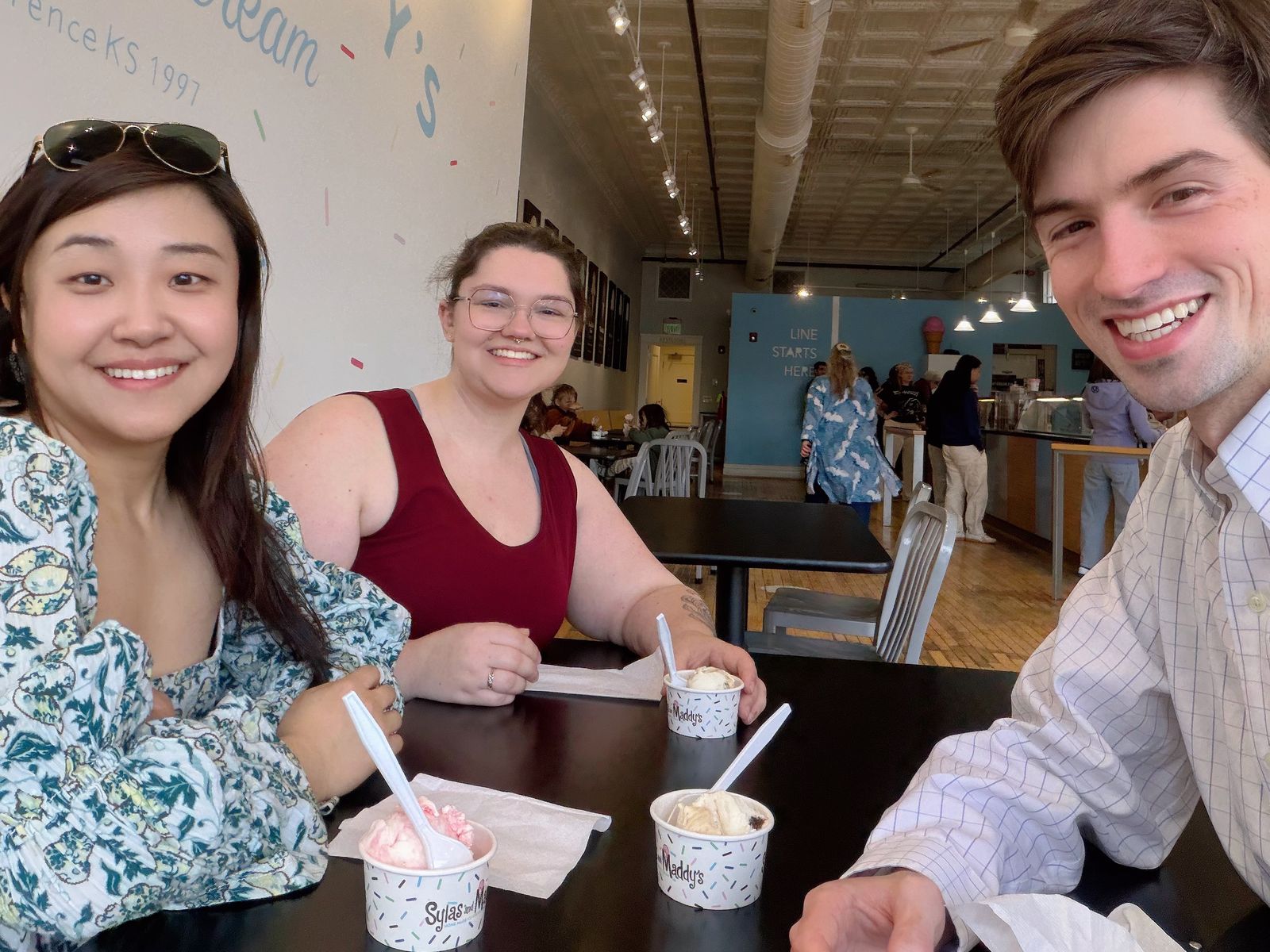
From left, Yue Li, Abigail Butler and Ned Gidley sharing ice cream at a table in an ice cream shop
Ice cream with the team in Lawrence, KansasFrom left: Dr. Yue Li; Abigail Butler, M.A. student; Ned Gidley, Ph.D. candidate
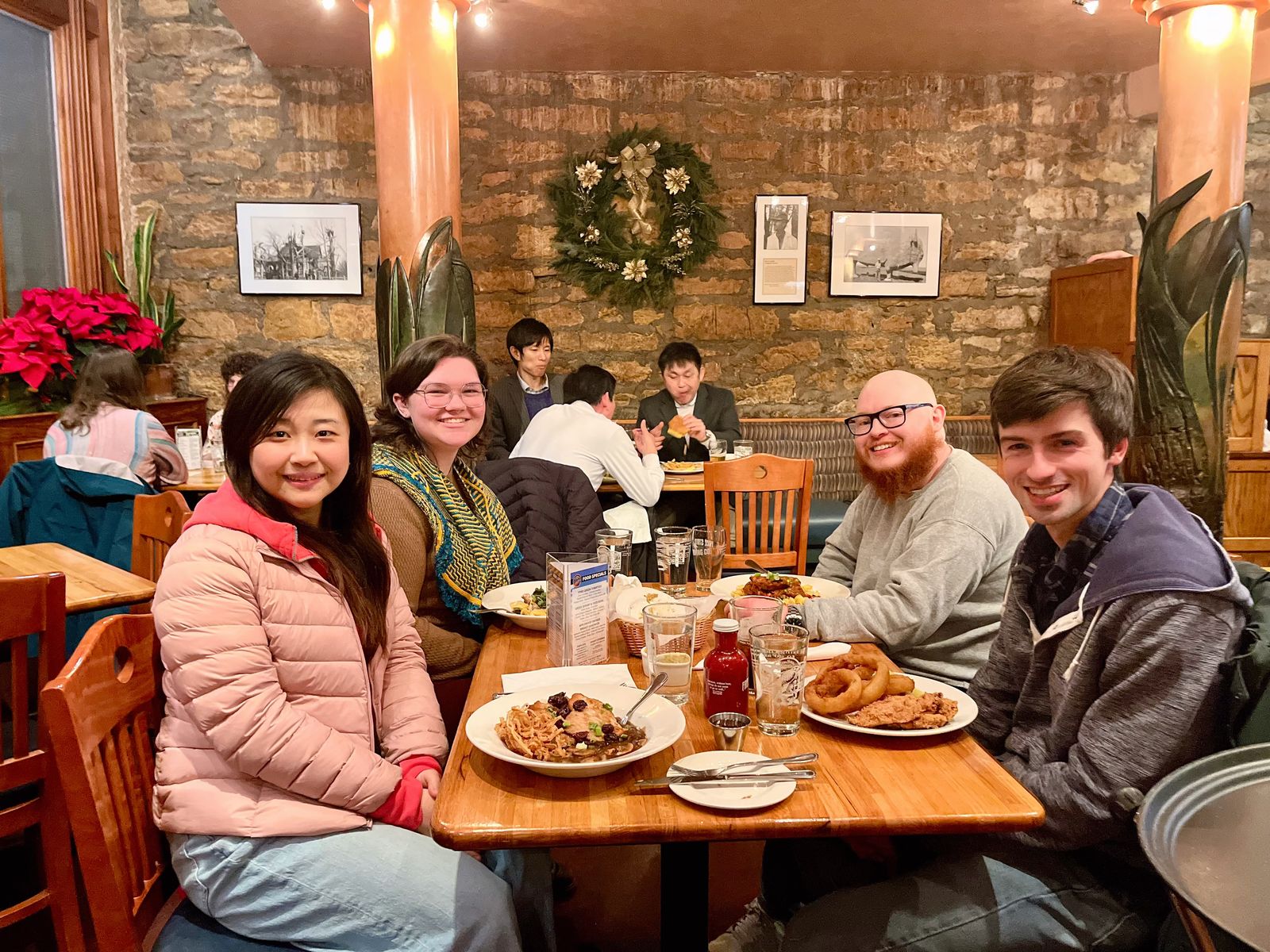
From left, Yue Li, Abigail Butler, Nathan Davis and Ned Gidley at dinner in a restaurant
Team dinnerFrom left: Dr. Yue Li; Abigail Butler, M.A. student; Nathan Davis, Ph.D. candidate; Ned Gidley, Ph.D. candidate

* Graduate student collaborator at the time of the study; † undergraduate student collaborator at the time of the study

Peer-reviewed journal articles

  1. 2026Xu, S., Gong, Z., Li, Y., Zhao, Y., & Ahsan, A. Building appropriate trust in artificial intelligence: Examining a dynamic trust calibration model and an intervention. International Journal of Human–Computer Interaction, 1–21. doi.org/10.1080/10447318.2026.2719173
  2. 2026Parmet, T.*, Li, Y., Cappella, J., Scherer, L. D., Waters, E. A., & Housten, A. J. Media reporting of the 2024 US Preventive Services Task Force mammography guideline update. JAMA Network Open, 9(3), e260040. doi.org/10.1001/jamanetworkopen.2026.0040
  3. 2026Li, Y. From problem to practice: A conceptual framework and action agenda for health misinformation resilience. Journal of Applied Communication Research, 54(1), 110–116. doi.org/10.1080/00909882.2025.2573952
  4. 2026Xu, S., Gong, Z., Li, Y., Zhao, Y.*, & Huang, S.* The trust cost of AI errors: Examining cognitive and affective trust dynamics in human-AI collaboration. International Journal of Human–Computer Interaction, 42(10), 7666–7681. doi.org/10.1080/10447318.2025.2560522
  5. 2023Cappella, J. N., & Li, Y. Principles of effective message design: A review and model of content and format features. Asian Communication Research, 20(3), 147–174. doi.org/10.20879/acr.2023.20.023
  6. 2023Li, Y., Wang, Z., & Li, Q. Presidential communication during the pandemic: A longitudinal examination of its relationship with partisan perceptions and behaviors in the United States. Human Communication Research, 49(4), 433–447. doi.org/10.1093/hcr/hqad025
  7. 2023Li, Y., & Bond, R. M. Examining semantic (dis)similarity in news through news organizations' ideological similarity, similarity in truthfulness, and public engagement on social media: A network approach. Human Communication Research, 49(1), 47–60. doi.org/10.1093/hcr/hqac020
  8. 2023Li, Y., Gee, W., Jin, K., & Bond, R. M. Examining homophily, language coordination, and analytical thinking in web-based conversations about vaccines on Reddit: Study using deep neural network language models and computer-assisted conversational analyses. Journal of Medical Internet Research, 25, e41882. doi.org/10.2196/41882
  9. 2022Li, Y., & Bond, R. M. Evidence of the persistence and consistency of social signatures. Applied Network Science, 7(1), 1–19. doi.org/10.1007/s41109-022-00448-0

Conference presentations

  1. 2026Xue, H., Li, Y., Lyons, B. A., & King, A. J. Selective public uptake of the Make America Healthy Again (MAHA) campaign across seven online platforms. Text as Data (TADA) Conference, Berkeley, CA.
  2. 2026Xue, H., Li, Y., Lyons, B. A., & King, A. J. #MakeBeefGreatAgain: Politicized health lifestyle discourse and agenda melding in early #MAHA discourse. 12th International Conference on Computational Social Science (IC2S2), Burlington, VT.
  3. 2025Li, Y., Gidley, N.*, Davis, N.*, & Butler, A.† Toward a rhetorically informed typology for misleading politicized health information. National Communication Association, 111th Annual Convention, Denver, CO.
  4. 2025Li, Y., & Qin, J.* Cumulative effects of egocentric networks on attitudinal extremity about politicized health issues. National Communication Association, 111th Annual Convention, Denver, CO.
  5. 2025Xu, S., Gong, Z., Li, Y., Zhao, Y.*, & Ahsan, A.* Building appropriate trust in artificial intelligence: Examining a longitudinal trust calibration model and an intervention. International Communication Association, 75th Annual Conference, Denver, CO. Top Paper Award, Human-Machine Communication Division.
  6. 2024Li, Y. Unveiling virality: In the context of COVID-19 vaccines, accurate information triumphs over misinformation, driven by network clustering and threat information. National Communication Association, 110th Annual Convention, New Orleans, LA.
  7. 2024Li, Y. The staying power of misinformation: The differential fidelity of information with different veracity in the diffusion landscape. International Communication Association, 74th Annual Conference, Gold Coast, Australia.
  8. 2022Li, Y., Wang, Z., Redbird, B., Lumpkin, R., Archit, D., Yang, K., & Cirtwill, P. The partisan divide and the pandemic: "Bias" in media coverage, media selection, and media processing. International Communication Association, 72nd Annual Conference, Paris, France.
  9. 2021Wang, Z., Li, Y., & Li, Q. White House communication and its impact on the public during the pandemic. International Communication Association, 71st Annual Conference, virtual.
  10. 2016Li, Y. How do people with an interdependent cultural background show optimistic bias? Exploring optimistic bias about polluted haze among residents of two Chinese cities. National Communication Association, 102nd Annual Convention, Philadelphia, PA.
  11. 2015Li, Y. Predicting Chinese individuals' intention to have a second child: A study combining social norms theory and the theory of reasoned action. Eastern Communication Association, 106th Annual Convention, Philadelphia, PA.

Grants

  1. 2025–2027New Faculty Research Development Award, University of Kansas ($9,917). PI, Investigating the Effectiveness of Theory-driven AI-based Misinformation Interventions in Public Health Policies.
  2. 2025–2026FRESSH Program Fellow (Faculty Research in the Social Sciences, Humanities, and Arts), University of Kansas ($3,000). Research support and proposal-development workshops for external funding applications.
  3. 2025–2026Course Design Institute Fellow, Center for Teaching Excellence, University of Kansas ($1,000). Support to develop an interactive graduate seminar in computational social science.

Teaching

I believe a good professor helps students on the journey of learning in at least three ways: equipping them with knowledge and skills that prepare them for future endeavors in academia or industry, supporting them with empathy when they encounter obstacles on the way to success, and training them to become lifelong learners after they graduate.

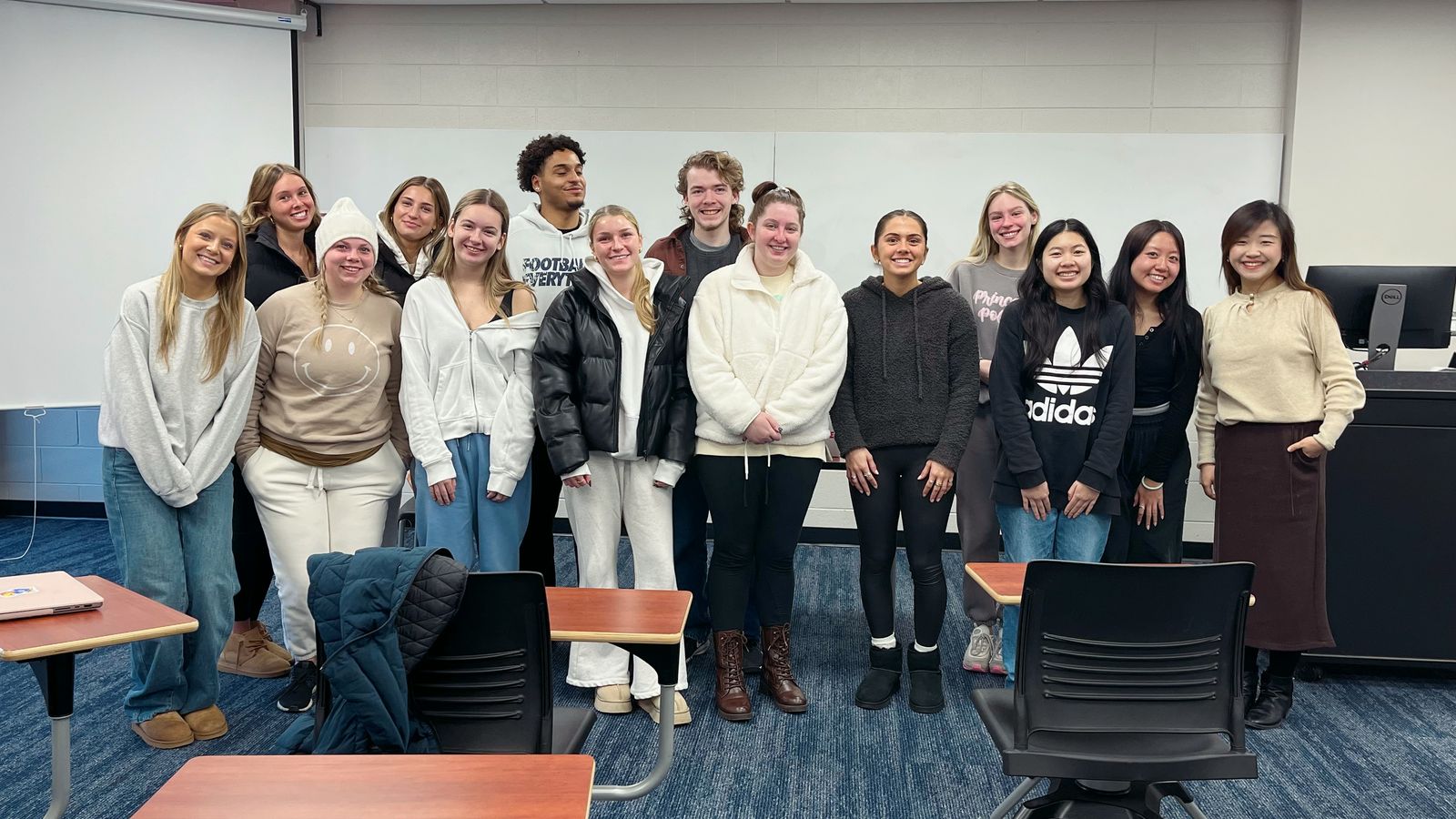
Yue Li with a group of undergraduate students from COMS 320 in a classroom
With undergraduate students in COMS 320 Communication and New Media, Fall 2024

COMS 930 tutorials

Hands-on labs and notebooks from COMS 930 Computational Methods in Social Sciences. Read each one with its code and output, download the R labs for RStudio, or open the Python notebooks in Google Colab. All tutorials, with search

Network analysis in R
Images and text in Python

Courses taught as instructor of record

CourseTitleTermInstitutionMaterials
COMS 930Computational Methods in Social SciencesSpring 2026University of KansasSyllabus · Tutorials
COMS 356Introduction to Behavioral Research Methods in CommunicationSpring 2025, Fall 2025, Spring 2027 (upcoming)University of KansasSyllabus
COMS 620Advanced Communication and New MediaSpring 2027 (upcoming)University of Kansas
COMS 320Communication and New MediaFall 2024, Spring 2025, Fall 2025, Spring 2026University of KansasSyllabus
COMM 3558Social Media (online)Summer 2023Ohio StateSyllabus
COMM 3628Contemporary Persuasion Theories (online)Autumn 2022Ohio StateSyllabus
COMM 2367Persuasive Communication (online)Spring 2022Ohio StateSyllabus
COMM 3163Industry Research MethodsAutumn 2021Ohio StateSyllabus
COMM 3444Advertising and Society (online)Summer 2021Ohio StateSyllabus
COMM 3160Communication Research MethodsSpring 2021Ohio StateSyllabus
COM 110Public SpeakingFall 2015NC State

Teaching assistant

CourseTitleTermInstitution
COMM 2540Introduction to Communication TechnologiesAutumn 2020Ohio State
COMM 3444Advertising and SocietySpring 2020Ohio State
COMM 2331Strategic Communication PrinciplesAutumn 2019Ohio State
COM 257Media History and TechnologySpring 2015NC State
COM 230Introduction to Communication TheoryFall 2014NC State

From student evaluations

I absolutely loved this course! I learned so much from my professor, who seemed genuine about the coursework and both knowledgeable and filled with pride regarding her work. I would happily take this course again and recommend it to a friend. I have become more passionate about advertising because of this class, so thank you!
Yue is a very patient and helpful instructor. She is amazing at explaining things in a way that you will understand, and she makes the atmosphere for learning and asking questions very comfortable.
She works really hard to make sure her students are engaged and participating. She gives it her best and you can clearly tell the passion for teaching is there that a lot of other teachers don't have.
I think the professor did a great job at providing real-life examples and exposing us to modern-day articles that related to the topics we learned each week. I genuinely enjoyed this course and feel like I learned a lot.
Yue is one of the best TAs I have ever had. She worked so hard to make sure that we understood the material and was always helping us do the assignments. She provided great additional resources outside of what the professor gave us!
Amazingly structured online course that required very minimal clarification on assignments.
Yue Li was fantastic this semester, very helpful and kind. She was easy to get in touch with and was awesome communicating!
Yue is one of the best TAs I've had as a Comm student. She is very helpful and lectures well.

Curriculum vitae

Appointments

  1. 2024–now
    Assistant Professor, Department of Communication Studies, University of Kansas
  2. 2023–2024
    Postdoctoral Research Fellow, Annenberg School for Communication, University of Pennsylvania

    Faculty supervisor: Joseph N. Cappella

  3. 2018–2023
    Instructor of Record; Research and Teaching Assistant, School of Communication, The Ohio State University
  4. 2016–2018
    Research Executive, Kantar Millward Brown (WPP Group), Shanghai

    Led research on advertising effectiveness, campaign evaluation, and brand health tracking from proposal to final report for brands including L'Oréal, Nescafé, Pizza Hut, and Yili.

Education

  1. 2023
    Ph.D., Communication, The Ohio State University

    Graduate interdisciplinary specialization in quantitative research methods. Advisors: Zheng Joyce Wang and Robert M. Bond

  2. 2016
    M.S., Communication, North Carolina State University

    Advisor: Andrew Binder

  3. 2014
    M.A., Communication and New Media, City University of Hong Kong

    With distinction

  4. 2013
    B.A., Advertising, Tianjin Foreign Studies University

    Ranked first of 46 students